Finally my proposal to offer the course Global Music Culture was approved last Wednesday and next semester I will be employed as a part-time assistant professor at my alma mater National Taiwan University, where I was awarded a BSc in Botany and an MBA in Accounting. Although it's neither a full-time nor a permanent post, it's a vacancy created by myself, not a temporary job to cover someone else, and thus, I believe, an important stepping stone to me.
The committee made the decision shortly after a 30-min trial lecture and then a Q&A session. I am so delighted that thy appreciated my intention to include issues such as popular music, the music industry and new media in the course, as opposed to an approach to deal with World Music solely either from the perspective of ethnomusicology or in the way record companies promote whatever they call World Music.
Although a Chinese saying goes 'an evil chance seldom comes alone' (huo bu danxing 禍不單行), it appears to me fortune sometimes arrives in pairs, particularly on this specific day.
Immediately after the result was announced, I received a call from the company which commissioned me to compose for their Angkor Wat film. There is now a new music supervisor, who would like me to continue the project, adjusting the orchestration a bit and fine-tuning the balance of each channel, and kindly offers an unexpected small rise in remuneration. On this occasion, Angkot Wat is reactivated and rescheduled into my timetable.
Being an anxious, pessimistic person who always searches for linen linings in a cloud and seldom believes good luck would knock at my door, I hope the approved course will start in practice and the reactivated project will be completed in peace.
09 December 2007

29 November 2007
Shaking to the bouncy Afropop rhythm with my students
 There are ten students in my world music class. A few of them choose this course because they really have passion for musics of different cultures; a few of them are here because they need more credits for their degree; the others, I believe, drop in for no reason.
Officially, today is the last day of this temporary part-time teaching job. However, it appears that Canzio hasn't yet been back from his study leave (I hope he was not captured and cooked by certain anthropophagous natives in his field work) and thus I shall carry on with these students. As we do have fun from time to time, I would love to spend two hours a week with them while accumulating teaching experience for my academic CV.
After exploring a wide variety of traditional African music last week, today we shifted to African music in modern times, including choral activities, 'classical' music and Afropop. To be honest, Afropop is beyond my expertise, so I had to put in hours swotting up on the history of the development of popular music in different corners of this huge continent, listening to song examples and infusing all the neurones in my head with the rhythmic pulsation of mbaqanga, marabi, kwela, Krio dance music, salegy, iscathamiya, marrabenta, soukous, mbalax, juju, tuku and highlife.
There are more 'genres' of Afropop than these, but these materials were indeed more than enough for one hour, the second half of today's lecture. Instead of showering them with a plethora of boring stylistic, rhythmic, melodic, harmonic or whatever -ic analysis, I just gave some general descriptions about each genre and then played the music. They had fun and so did I.
18 November 2007
I didn't see the image of pipa in Pipa Images
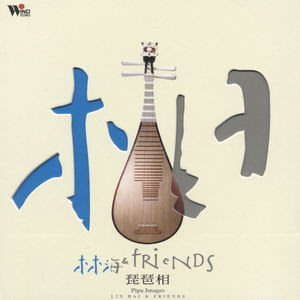 I learnt of this album, Pipa Images (Pipa xiang 琵琶相), released quite a while ago in 2003, from May. I love the smoothly-flowing melodies, the hauntingly beautiful timbre of pipa (琵琶) and, above all, the idea of infusing a time-honoured Chinese instrument with different ethnomusical elements. However, I didn't encounter any climactic tension, which would usually be heard in a piece from the traditional pipa repertoire, nor did I catch any impressive sound effect, which would be conventionally created by a variety of fingering techniques.
It appears to me that the producer/composer has affection for the distinct tone colour of the pipa, but somehow ignores the characteristic expressions that can only be conveyed through the idiomatic practices of the instrument. As a result, while to some foreigners who are not familiar with the Chinese pipa, this album may present a refreshing combination of musical possibilities, to me it is simply another nicely produced easy-listening album featuring the sound of the 'pipa'.
Watch this video clip of the renowned piece 'King Chu doffs his armour' (Bawang xie jia 霸王卸甲) to get a representative experience of the pipa's 'characteristic expressions'.
I'm not proposing that the producer should maintain all the way the pipa's stereotypical image of vibrant strumming or ever-present rasgueado techniqes. However, it would be great if its resonant, clear and enchanting sound could be heard via the energetic rasgueado. Morever, this album would also become a ground-breaking act if the violent, fierce strumming could be used and incorporated into serenity with the graceful melodies.
15 November 2007
Deleting Angkor Wat
I am not suggesting that I'm gonna emulate the Taliban by bombing the UNESCO world heritage Angkor Wat. I am talking about ceasing to compose the commissioned Angkor Wat soundtrack.
It was indeed great fun to write music for this word heritage site, but it's irritating to have a client who wouldn't sign the contract before making more requests. The production team couldn't even decide whether they should use my composition or a track of copyrighted music which they felt too complicated to obtain permission to use.
What's the point of engaging a composer if the proposed CD track is still preferred? What's the point of reworking the score if the client can't make the decision?
While they may leave it in abeyance, I'd rather quit. I enjoy composing but not making alteration time after time against my own aesthetic for a client who doesn't even sign the contract.
Let me remove the blooming Angkor Wat from my work schedule and send the work-in-progress score to the 'closed' folder.
It was indeed great fun to write music for this word heritage site, but it's irritating to have a client who wouldn't sign the contract before making more requests. The production team couldn't even decide whether they should use my composition or a track of copyrighted music which they felt too complicated to obtain permission to use.
What's the point of engaging a composer if the proposed CD track is still preferred? What's the point of reworking the score if the client can't make the decision?
While they may leave it in abeyance, I'd rather quit. I enjoy composing but not making alteration time after time against my own aesthetic for a client who doesn't even sign the contract.
Let me remove the blooming Angkor Wat from my work schedule and send the work-in-progress score to the 'closed' folder.
08 November 2007
Relocating Angkor Wat to Tibetan Plateau

(image from Life on the Tibetan Plateau)
I've just had a meeting with the producer and other supervisory personnel of the Angkor Wat film team. In their point of view, my proposed piece feels so contemporary. Although it has a good balance in all registers of sounds and can surely be used in their future plan, on this occasion they would like something that bears certain religious mark, has a touch of history and creates a mysterious atmosphere. Well, I now present a different version, with the same backdrop, the alternate C and B-flat chords, but with the more sonorous tone of string basses and the haunting voices of a choir.
May, the first one to listen to this redone version, commented that she heard monks droning and eagles screeching and it felt as if the Angkor Wat had been moved to the Tibetan Plateau. She wondered if I should treat the Angkor Wat soundtrack in such an epic manner.
Does this reworked one carry any epic or probably post-apocalyptic atmosphere?
04 November 2007
Coffee on the Singaporean menu
The vocabulary of Singlish, an English-based creole spoken in Singapore, consists of words originating from Malay, Cantonese, Hokkien (福建), as well as some other Indic languages, such as Tamil, to a lesser extent. Although the Singaporean government discourages the use of Singlish in favour of Standard English and runs Speak Good English Movement, this English-based creole is still used by most Singaporeans.
Both Fanne's brother-in-law, who is now working in Singapore, and her sister, who unfortunately still lives in Taipei at the moment but frequently flies over to visit him, have spent some time acquainting themselves with Singlish. Among a wide selection of interesting (or amusing) examples is coffee on the Singaporean menu. According to their demonstration and explanation, as well as my own investigation, I found following terms and origins of those non-English words.
Both Fanne's brother-in-law, who is now working in Singapore, and her sister, who unfortunately still lives in Taipei at the moment but frequently flies over to visit him, have spent some time acquainting themselves with Singlish. Among a wide selection of interesting (or amusing) examples is coffee on the Singaporean menu. According to their demonstration and explanation, as well as my own investigation, I found following terms and origins of those non-English words.
- Kopi: coffee with milk and sugar, or sweetened condensed milk
It's the Singaporean default configuration of coffee. - Kopi-kosong: coffee without milk, without sugar
Kosong, a Malay word for 'empty', 'hollow'. - Kopi-o (also kopi-oh): coffee with sugar, without milk
O, the word for 'black' (烏) in Hokkien. - Kopi-kau: strong coffee, with condensed milk
Kau means (of liquid) 'stronger' or 'thickened' (厚) in Hokkien. - Kopi-C: coffee with evaporated milk
C stands for Carnation, a proprietary name for a brand of evaporated milk). - Kopi-ping: iced coffee
Ping, the word for 'ice' (冰) in Hokkien.
03 November 2007
Composing for Angkor Wat

(Image from Far Horizons)
I haven't touched Sibelius for quite a while since I finished an advertising song commission in March. Thanks to an old friend, Richard Tsao, a couple of days ago I received a commission to write a soundtrack for a short about Cambodia and have now started composing with Sibelius again.
I'm still with Sibelius 3 (can't be bothered to pay an exorbitant price to upgrade to Sibelius 5 just for some more functions I'll only use when Ang Lee asks me to write music for his film, but would love to do so if someone else engages me to do a similar task and pays for it). The start-up music in this old version, the opening of Jean Sibelius's 3rd Symphony, really reminds me of the time I used it to make karaoke tracks of Christian hymns in Stirling.
Since the producer hopes that the soundtrack carries a hint of the mysterious image of Angkor Wat and the state religion Theravada Buddhism in Cambodia, I have spent some time gazing into the photo of Angkor Wat while intoning a Buddhist stanza in Pali to see if inspiration would come to me.
parinibbute bhagavati saha parinibbanaAdditionally, I've also tried to find some clue from Cambodian traditional music. However, I don't think those I encountered over the Internet would help. It really doesn't sound any spiritual at all but something entertaining to me. (Check out this example from Asian Classical Music in MP3 Format.)
sakko devanam indo
imaj gathaj abhasi
anicca vata sangkhara
uppada-vaya-dhammino
uppajjitva nirujjhanti
tesaj vupasamo sukho ti
(When the Blessed One had passed away, simultaneously with his Parinibbana, Sakka, king of the gods, spoke this stanza, 'Transient are all compounded things, subject to arise and vanish; having come into existence they pass way; good is the peace when they forever cease.' )
(translation cited from Digit Library & Museum Of Buddhist Studies)
Anyhow, this afternoon, I put in three hours and drafted one and a half munites. The producer will decide if I am on the right path next week. If so, I shall turn it into a longer piece and try to match music to moving images as the producer wishes.
Use your earphones to avoid missing the opening low-frequency sound waves.
15 October 2007
Disorganised in an organised fashion
 The original version of Murphy's Law states,
If there's more than one possible outcome of a job or task, and one of those outcomes will result in disaster or an undesirable consequence, then somebody will do it that way.To put it simply,
If anything can go wrong, it will.Therefore, I believe that the more organised you strive to be or to others you seem, the less likely you can keep every ongoing task shipshape and Bristol fashion.
I'm going to lecture on Japanese music tomorrow, on Mongolian and Tibetan a week tomorrow and on Indian a fortnight tomorrow. I thought I could manage to partition into three sections the temporary memory device in my head reserved for the World Music course and each of them can store respective materials for each of the ensuing three lectures. However, I failed.
No only are music tracks from different areas saved in the wrong section but also passages from different tracks are spliced or fused. A vivid image in my head all the time is a kubuki stage with a group of Tibetan monks on the right side chanting
to the sitar and tabla accompaniment on the left.
I've promised my student that in addition to 'traditional' and 'classical' stuff from each country or area, at the end of each lecture we shall listen to something more 'conemporary' and 'crossover', such as when shamisen meets John Zorn or some latest Bollywood numbers. Therefore, I don't see any problem in presenting them such a collage on the kabuki stage. Nevertheless, this should not happen before I show them the indigenous music from those different places.
In my head audio examples are all mixed up; in reality they are burnt onto different CDs accordingly, and lecture slides and other materials are also stored in correct file folders in my MacBook Pro. Although I'm now a bit disorganised in an organised fashion, since I've prepared the presentation pack, I may be able to play by ear in class, just like those jazzmen who can flesh out a tune with a fake book or lead sheet. We should not ask a jazzman to be too organised, shouldn't we?
13 October 2007
Repackaging M&S in Taiwan

A Chinese saying goes, 'A foreign monk chants better (外來的和尚會唸經 wailai de heshang hui nianjing).' Another one says, 'The moon looks fuller in other countries (外國的月亮比較圓 waiguo de yueliang bijiao yuan).' Sometimes people do believe that things from a distant land are of higher quality than domestically made products. However, whether imported goods are better or not, they may need repackaging or image-modifying to fulfil native consumers' expectation one way or another.
The established British retailer Marks & Spencer launched its first outlet in Kaohsiung in May and then another two in Taipei in September. Although one of the Taipei outlets is just two blocks away from our flat, we didn't visit it until today. Having worked unflaggingly to collect audiovisual materials and prepare the 'World Music' lecture pack for quite a while, I managed to spare one Saturday afternoon to check it out with Fanne.
I regard M&S in the UK as a high-street-version TESCO, but it has a different image in Taiwan: an upmarket fashion outlet which also sells tea, biscuits and wine but no fresh food such as veggies and meat. While M&S in the UK only provides Britons with free plastic carrier bags both for clothes and for fresh food, M&S in Taiwan offers us fancy paper bags at no extra cost for whatever we purchase. They even fold every clothing item neatly and wrap it individually before putting it in the bag.
I doubt what Taiwanese customers would think if M&S were positioned just as a supermarket which sells expensive imported stuff which could only be taken away in plastic bags.
Truly amazed by their upgraded packaging in Taiwan, we decided to take a picture to show our friends in the UK how M&S is doing here.
01 October 2007
Winter is approaching, but not in Taipei
Today is the first day of October. We have just passed the autumnal equinox a week ago and people in some countries are about to put their clocks backward one hour. Winter is approaching.
While according to the BBC website, the forecast maximum temperature in Stirling today is 16°C, the temperature now in Taipei is 31°C. As a cold weather person who wears only a polo shirt most of the time in Winter and take cold showers all year round in Scotland, I would call it 'perfect bliss' if I could return to Stirling immediately.
It is reported that high water temperature causes coral bleaching and subsequent death. Although I don't think high temperature would lead me to mortality, it is surely damaging my brain. I wonder how ancient Egyptians developed their civilisation in the desert.
While according to the BBC website, the forecast maximum temperature in Stirling today is 16°C, the temperature now in Taipei is 31°C. As a cold weather person who wears only a polo shirt most of the time in Winter and take cold showers all year round in Scotland, I would call it 'perfect bliss' if I could return to Stirling immediately.
It is reported that high water temperature causes coral bleaching and subsequent death. Although I don't think high temperature would lead me to mortality, it is surely damaging my brain. I wonder how ancient Egyptians developed their civilisation in the desert.
Subscribe to:
Posts (Atom)